
Unleash Your Brand with Creative Graphic Design Solutions
Unleash Your Brand with Creative Graphic Design Solutions: Expert Services to Elevate Your Visual Identity and Drive Business Growth

Creative graphic design solutions combine strategy, visual craft, and measurable marketing goals to elevate a brand’s visual identity and accelerate business growth. These solutions work by translating position, audience insight, and conversion objectives into consistent visual systems—logos, color palettes, typography, and templates—that increase recognition, reduce friction, and support marketing performance. Readers will learn how professional design drives brand recognition, builds customer trust, and improves digital and print marketing outcomes, plus practical guidance on web UI/UX, social graphics, and emerging trends such as AI-assisted design. The article maps core benefits, details an identity design process tailored to small businesses, outlines specific design deliverables that boost digital marketing impact, shows how web/UI/UX amplifies brand presence, and highlights current innovations shaping visual branding. Throughout, expect actionable lists, comparison tables mapping deliverables to outcomes, and clear examples that help you apply visual branding principles to real campaigns and systems.
What Are the Core Benefits of Professional Graphic Design Services for Brand Identity?
Professional graphic design services create a coherent visual identity that increases brand recognition, communicates value, and improves conversion across touchpoints. By applying deliberate visual systems—distinctive logos, consistent color palettes, and typography rules—design reduces cognitive load for customers and makes brand signals easier to process and remember. The mechanism is simple: repeated, consistent visual cues form stronger mental associations, which in turn support trust and preference during purchase decisions. Below are concrete ways design translates into business outcomes and the tactical deliverables that produce those results.
- Stronger Recognition: Distinctive logos and iconography make brands easier to recall in crowded markets.
- Increased Trust: Consistent visual branding projects professionalism and reduces perceived risk for buyers.
- Higher Conversion: Optimized layouts and clear visual hierarchy guide users to act and improve marketing ROI.
The practical implication is that investing in design systems pays off across campaigns, packaging, and digital funnels by creating predictable brand experiences that customers can rely on.
Different design deliverables influence outcomes through specific attributes, as shown below.
| Deliverable | Key Attribute | Business Outcome |
|---|---|---|
| Logo | Distinctive mark and scalable formats | Improved recall and cross-channel recognition |
| Brand Style Guide | Color palette, typography, usage rules | Consistent communication and faster production |
| Social Templates | Reusable layouts for posts and ads | Higher engagement and faster campaign rollout |
This comparison clarifies how individual assets contribute to overall identity health. Understanding the role of each deliverable makes it easier to prioritize design investments that align with growth goals.
How Does Creative Logo Design Enhance Brand Recognition?
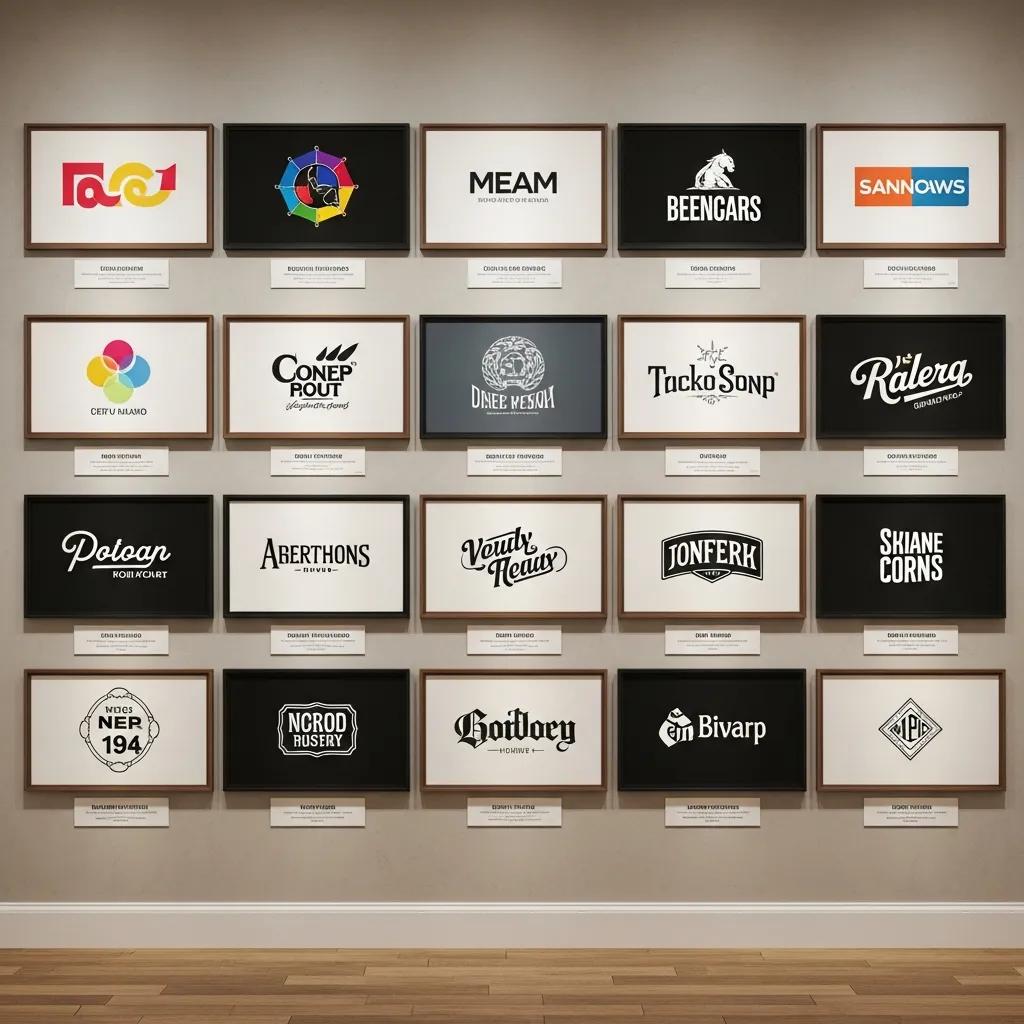
A logo enhances brand recognition by creating a simple, repeatable visual cue that customers associate with a company’s promise and positioning. Design choices—shape, negative space, color contrasts, and typographic treatment—work together to increase distinctiveness and memorability, and scalable construction ensures the logo reads clearly from social avatars to large-scale signage. When a logo pairs with supporting brand elements like a color system and iconography, the combined meronomy (logo plus palette plus type) forms a recognizable identity system that transfers across channels. Thoughtful logo design also incorporates adaptability rules—single-color, responsive versions, and clear spacing—to preserve recognition as the mark appears in new formats and contexts, which leads naturally into why consistent visual branding matters for trust.
Why Is Consistent Visual Branding Essential for Customer Trust?
Consistent visual branding builds trust by setting predictable expectations and signaling professionalism at every interaction, from ad creative to packaging and website interfaces. When customers encounter uniform use of color, typography, and tone, they interpret that consistency as stability and reliability, which reduces friction in decision-making and increases perceived value. A hypothetical before/after shows how inconsistent colors and typography can confuse buyers and lower conversion, whereas a unified style guide streamlines creative production and improves perceived credibility. Implementing visual rules across digital and physical touchpoints closes the loop between recognition and trust, preparing the brand for effective implementation through a structured design process.
How Does TWA Studio's Brand Identity Design Process Empower Small Businesses?
TWA Studio approaches brand identity design for small businesses as an outcomes-driven collaboration that links audience insight to tangible deliverables and long-term support. The process centers on discovery, concept development, and practical implementation—each phase tailored to ensure small-business constraints are respected while maximizing brand lift. By combining personalized online marketing services and data-driven digital experiences, the studio aligns brand visuals with performance goals and operational realities. The team emphasizes long-term partnerships and empowering small businesses with systems they can use consistently across marketing channels; contact Corryn for project alignment and next steps.
TWA Studio’s process follows clear, actionable steps that produce measurable outcomes:
- Discovery & Research: Gather audience insights and positioning to define visual priorities and competitive differentiation.
- Concept & Logo Development: Produce concept directions and refine a primary mark that communicates the brand story.
- Brand Style Guide Creation: Deliver a practical guide with color, typography, iconography, and usage rules for consistent application.
- Implementation & Ongoing Support: Apply assets to web, social, print, and provide templates and management advice for continuity.
Each step produces distinct outputs—research artifacts, logo files, a style guide, and templates—so small businesses receive both strategy and execution support that reduce guesswork and speed deployment.
What Are the Key Elements of Effective Brand Style Guides?
Effective brand style guides define how visual assets should be used to ensure consistent presentation and prevent misuse that dilutes recognition. Core components include clear logo usage rules (spacing, color variants), a defined color palette with hex/RGB specifications, a typography system with hierarchy examples, iconography guidelines, and sample layouts for common applications like social posts and email headers. Including tone-of-voice notes and a quick-reference checklist helps non-design staff apply the system correctly, reducing production errors and accelerating campaign turnaround. A compact guide with practical templates empowers teams to maintain quality without needing constant design oversight.
How Does Custom Logo Design Reflect Your Brand’s Story?
Custom logo design reflects a brand’s story by translating strategic attributes—mission, values, positioning—into symbolic forms and stylistic choices that communicate meaning at a glance. The design process links conceptual choices (metaphor, form language, historical references) to visual treatments like line weight, contrast, and negative space to create a mark that resonates emotionally and functionally. For example, a challenge to modernize a heritage craft business might produce a logo that balances classic serif cues with simplified geometric forms, signaling both tradition and contemporary relevance. When concept-driven logos connect to the broader brand system, they become shorthand for the brand narrative across marketing experiences.
Which Creative Graphic Design Solutions Boost Digital Marketing Impact?

Creative graphic design solutions that directly support digital marketing include optimized ad creatives, social media templates, landing page visuals, and motion assets that increase attention and guide action. These deliverables influence measurable metrics—CTR, engagement rate, time on page—by improving visual hierarchy, contrast, and clarity of calls to action. The mechanism is visual persuasion: design reduces decision friction and highlights the desired behavior in every frame and layout. Below is a practical mapping of solution types to measurable impacts to help prioritize work for performance-driven campaigns.
Key solution types that boost marketing performance:
- Social Media Graphics: Improve feed engagement and shareability through platform-appropriate templates.
- Digital Ad Creatives: Increase CTR and conversion by testing variations with clear hierarchy and strong CTAs.
- Landing Page Visuals: Boost conversion rates by aligning visuals with ad messaging and simplifying choice architecture.
| Solution Type | Use Case | Measurable Impact |
|---|---|---|
| Social Graphics | Regular organic posting and ads | Engagement uplift and higher share rate |
| Banner & Ad Creatives | Paid acquisition campaigns | Increased CTR and improved ROAS |
| Print Flyers & Signage | Local promotions and events | Greater local reach and brand recall |
This table shows how design deliverables map to quantifiable marketing outcomes, allowing teams to measure the return on design investments and optimize creative allocation.
How Do Social Media Graphics Drive Engagement and Brand Awareness?
Social media graphics drive engagement and awareness by combining platform-optimized dimensions, clear visual hierarchy, and template systems that reinforce brand recognition across repeated posts. Effective social templates use consistent logo placement, a limited color palette, and typographic scale to create a predictable visual identity while allowing content variety across campaigns. Performance-focused tips include using high-contrast focal points for CTAs, readable type at small sizes, and asset variants for stories, reels, and feed posts to maximize reach. When teams adopt templated systems, posting cadence improves and creative QA reduces, which helps sustain visibility and build audience familiarity over time.
What Role Do Print Marketing Materials Play in Visual Branding?
Print marketing materials—brochures, business cards, signage, and direct mail—play a tactile role in reinforcing brand value and reaching local audiences where digital touch is limited. Print's physicality creates a sensory impression that supports perceived quality; materials with considered finishes, paper stocks, and production details increase perceived value and credibility in face-to-face settings. Designers must balance print choices with digital assets to maintain omnichannel consistency, creating files that translate across formats while considering production constraints like bleed, CMYK conversion, and finish options. Integrating print into a broader campaign strategy extends reach and deepens brand impressions among local and event-based audiences.
How Can Web & UI/UX Design Enhance Your Brand’s Online Presence?
Web and UI/UX design enhance an online brand by aligning visual aesthetics with usability principles to create persuasive, trustworthy experiences that convert visitors into customers. Responsive layouts, clear visual hierarchy, optimized imagery, and accessible interactions reduce friction and reinforce brand messaging at critical moments in the customer journey. The mechanism links perception to behavior: faster, clearer, and more consistent interfaces increase engagement metrics and conversion rates while strengthening brand reputation. Below is a mapping of UI/visual elements to concrete business benefits to guide prioritization in website design and optimization.
| Visual/UI Element | Attribute | Business Benefit |
|---|---|---|
| Responsive Grid | Flexible breakpoints and scalable assets | Lower bounce on mobile and better engagement |
| Clear CTAs | High-contrast buttons with hierarchy | Increased click-through and conversions |
| Optimized Imagery | Compressed, correctly sized assets | Faster load times and improved SEO signals |
This table links specific UI choices to measurable business improvements, making it easier for teams to prioritize design work that directly impacts key metrics.
What Are the Principles of Responsive Website Visual Design?
Responsive website visual design ensures layouts adapt to varying screen sizes through flexible grids, scalable typography, and assets that serve appropriate resolutions. Designers must prioritize mobile-first thinking, optimize imagery with modern formats, and set touch-friendly target sizes for interactive elements to reduce user error and frustration. Adaptive typography and component libraries maintain consistency across breakpoints, while progressive enhancement ensures core content and actions are accessible even on constrained devices. Implementing these principles improves engagement, lowers bounce, and strengthens the brand impression across devices, which leads into how UX influences overall perception.
How Does User Experience Influence Brand Perception?
User experience influences brand perception by shaping how easily customers can achieve goals, understand offerings, and feel confident about decisions; positive UX increases trust, while friction erodes credibility. UX signals—fast loading, clear navigation, consistent interactions, and helpful microcopy—communicate that a brand is competent and customer-focused, which supports higher conversion and repeat visits. A short checklist linking UX changes to metrics includes improving load time to reduce bounce, simplifying forms to raise completion rates, and ensuring consistent interaction patterns to boost satisfaction. These improvements create a cumulative brand advantage that reinforces marketing and design investments.
What Are the Latest Design Innovations and Trends Shaping Visual Branding?
Design innovations in 2024 emphasize speed, personalization, accessibility, and interactive experiences that create differentiated brand moments. Key trends include AI-assisted concept generation and automation, motion and interactive micro-experiences in digital interfaces, and sustainable, accessible design systems that broaden reach and comply with contemporary expectations. These trends change both production workflows—making ideation faster—and the types of experiences brands offer, prompting teams to invest in adaptable systems that scale across channels. Below are notable trends with practical recommendations to future-proof brand systems.
- AI-Assisted Design: Use AI for rapid concept iteration while preserving human curation for brand alignment.
- Interactive & Motion Design: Implement subtle motion to increase engagement without detracting from usability.
- Sustainable & Accessible Design: Prioritize materials and digital accessibility to widen audiences and reduce environmental impact.
Adopting these trends strategically helps brands stay relevant while safeguarding consistency and usability across touchpoints.
How Is AI Transforming Creative Graphic Design Processes?
AI is transforming creative design by accelerating ideation, generating multiple visual concepts quickly, and automating repetitive production tasks such as resizing and asset export. These capabilities deliver time savings and broader concept exploration, enabling teams to iterate more rapidly and test variations for performance. However, AI outputs require human oversight to ensure brand alignment, cultural sensitivity, and strategic clarity; designers must curate and refine AI suggestions rather than use them verbatim. When used as a force-multiplier, AI shortens production cycles and expands creative options, but the final brand decisions remain design-led to preserve identity consistency.
What Future Trends Will Impact Visual Branding Strategies?
Future trends that will shape visual branding include immersive experiences (AR/interactive environments), deeper personalization powered by data, and stricter accessibility and sustainability expectations that demand inclusive design systems. Brands should invest in adaptable design systems, modular assets, and measurement frameworks that capture the impact of interactive formats on engagement and conversion. Experimentation with new formats should be governed by principles that protect core identity while enabling localized personalization. Remaining flexible and data-informed will enable brands to iterate on experiences that scale and resonate across diverse customer segments.
TWA Studio helps small businesses translate these innovations into pragmatic design systems and data-driven creative production; to explore portfolio examples or discuss how to apply these trends to your brand, contact Corryn or review the studio’s portfolio and online business profile for case references.
